Ovid tells the story of two immortals who came to Earth in disguise to cleanse the sickened world. No one would let them in but one old couple, Baucis and Philemon. And their reward for opening their door to strangers was to live on after death as trees—an oak and a linden—huge and gracious and intertwined.
The Greeks had a word, xenia—guest friendship—a command to take care of traveling strangers, to open your door to whoever is out there, because anyone passing by, far from home, might be God.
What we care for, we will grow to resemble. And what we resemble will hold us, when we are us no longer...
What is really alive in this world of things, what is private, not for sale? Only the worthless has real value.
The truth is in the trash. They have no name, No price tag. No code in the system for Love, Nature, Garbage.
They are free, free.
Those goods, fine and natural on the shelf, need no excuse. It’s the worthless junk, out of place, ugly thrown away. But which one came first? The store or the trash pit? Objects are born free, but everywhere they are in chains. Throw them away!
Set them free!
If one only had something to eat, just a little, on such a clear day! Or, if this is food for thought, why am I still hungry? Garbage, trash, free leavings. Dead commodities, once bonded, owned, money measured. Now crossed an invisible line.
Marx was right.
Are they freed of the lie that had prolonged
the existence of those moments swallowed
by time? She asked.
She asked if I thought my images were already
affected by the moss of time.
She wrote that she liked my videos.
"Perhaps the death of time concerns
only us," she answered.
"We who tear one another apart, pretending not to know it,
pretending not to taste
flavours anymore."
"Perhaps time has come to an end,
the sun has grown weary of rising, Chronos dies of starvation,
the ages and seasons turned
upside down," I said.
There is no need to fear or hope,
but only to look for
new weapons.
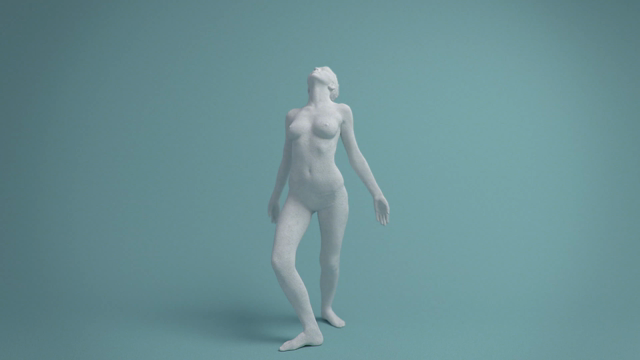
Sculptures are leftovers of our history,
of our ideas, our passions, our beliefs...
Sculpt the future with the leftovers
of history.
One day, their faces of stone crumble
and fall to earth.
A civilization leaves behind itself these mutilated traces.
But history has devoured everything.
An object dies when the living glance trained upon it disappears.
When men die, they enter into history.
When statues die, they enter into art.
This botany of death is what we
call culture.
That's because the society of statues
is mortal.
She knew this better than I ever could...
She wrote that the children at the
Sagene School knew this better
than their elders.
"It is imperative to remain less interested in who or what we imagine ourselves to be than in what we can do for one another, both in today’s emergency conditions
and in the grimmer circumstances
that surely await us."
Paul Gilroy
She said the words of Paul Gilroy helped
her to put all of this all into perspective,
made it tangible, simplified what she always already knew.
verb
gleaned; gleaning; gleans
Definition of Glean
1: to gather grain or produce
2: to gather material bit by bit
3: to find out information
4: to pick over in search of material
Glean
Sifting through memories and picking through archives, art, and life like a glaneuse, gathering little images in the basket of her film.
Film can be a recycling art-form. It reuses and remixes.
Film, when it filters and projects our memories, can be a gleaner itself.
Gleaning can be a metaphor for filming itself . . . and for reconsidering how we watch film.
She wrote that as she slurped down
her delicious noodles, she pondered
the power of food within such
complex and entangled issues.
She thought about the children.
She said as she sat in a ramen restaurant in downtown Oslo that night she thought about the project.
COLOPHON
“A Passion For The Possible,” Paul Ricoeur, 2010
“Borderlands/La Frontera: The New Mestiza,” Gloria E. Anzaldúa, 1987
“Food, Migration & Belonging: A Glossary” Rick Dolphijn and Nick Polson, Publishing Upcoming
“Foodscapes,” Rick Dolphijn, 2004
“Glean Definition & Meaning,” Merriam-Webster, 2022
“Gleaning – Meaning,” Richard Wilk, 2003
“Hunger,” Knut Hamsun, 1890
“It’s the Dream,” Olav H. Hague, 1966
“Racism – A Norwegian case study,” Mariama Njai, 2014
“Sans Soleil,” Chris Marker, 1983
“Statues Also Die,” Alain Resnais, Chris Marker and Ghislain Cloquet, 1953
“The Gleaner’s Eye,” Brian Gibson, 2021
“The Gleaners and I,” Agnes Varda, 2000
“The Overstory,” Richard Powers, 2018
“The Rights of Nations: Nations and Nationalism,” Ernest Gellner, 1983
“Under the Jaguar Sun,” Italo Calvino, 1986
The following texts were quoted, remixed, or served as inspiration for this project.
